
Connector Purchase
On This Page
Connector Purchase
Connector pricing, purchasing connector fittings, and connector sales require an understanding of valve connectors and instrumentation connectors. Connectors are widely used across major industries worldwide. They connect different components of circuits, networks, valves, and piping systems, enabling the flow of fluids. Depending on the application environment and operating conditions, connectors are available in various types and are used across a wide range of industries. Connector prices vary according to type and dimensions.
What Is a Connector?
The term connector refers to a component used to join two parts. It is derived from the English word connect. Connectors are used to join sections of tubing, pipes, or valves, such as stainless steel connectors. In general, connectors are used wherever two or more components with different dimensions or functions need to be joined. Connector prices vary depending on several factors.
As you may know, instrumentation tube fittings are installed onto tubing and secured in place. Conventional pipe fittings do not require tubing, and for this reason, instrumentation connectors typically cost slightly more than standard fittings. Purchasing connectors requires a thorough understanding of their design and function, particularly because reliable sealing is critical in valves and various types of fittings. Connector sales and purchasing are common across many industries.
When comparing tubing and pipes, tubing generally has thinner walls than pipe. This can make tubing unsuitable for direct threading, depending on its wall thickness and specifications. Consequently, conventional threaded connection methods used for pipes cannot always be applied to tubing. To learn more about connector prices and purchasing options, consult reputable connector suppliers.
Tubing, such as stainless steel tubing, requires fittings and tools compatible with its specifications. Among instrumentation fittings, compression fittings are among the most widely used types in the industry. Compression fittings use a front ferrule and a back ferrule to create a reliable seal.
When an instrumentation fitting is used to connect tubing to a threaded pipe or component, it is commonly referred to as a connector. By contrast, when an instrumentation fitting is used to join two tubes, it is generally called a union.
The front ferrule and back ferrule are two metal components that engage with each other as the fitting is tightened, creating a secure and reliable seal at the connection point and minimizing the risk of leakage. These fittings are customized for different applications and manufactured in various materials and dimensions, all of which affect the final connector price. When purchasing connectors, pay close attention to the material and dimensions.
Connector Sales
Like other industrial and instrumentation components, connectors are designed for specific applications and used in a wide range of industries and machinery. They must therefore be manufactured in accordance with relevant international standards to ensure compatibility and reliable performance across different equipment and markets. When purchasing connectors, check the applicable manufacturing standards. We recommend purchasing stainless steel connectors.
Connectors are available on the market in different materials, dimensions, sizes, shapes, and quality grades. However, the source article states that they are designed for a 6,000-class working pressure rating and can therefore be used with tubing of different wall thicknesses. Connector prices fluctuate with market conditions. To purchase connectors and obtain current pricing, consult reputable suppliers and websites.
When purchasing connectors, make sure the tubing wall thickness is suitable for the operating temperature and pressure conditions. Standard charts and tables specify the allowable tubing wall thickness for different operating conditions and should be consulted when selecting compatible connectors and tubing.
Today, advanced manufacturing technologies make it possible to produce connectors with precise dimensions and relatively low weight. As a result, the material used may not have a significant effect on the overall weight and final price of a connector. SS316L stainless steel connectors and SS316 connectors are widely used and are among the popular options available on the market.
Connectors are manufactured from various raw materials in accordance with standards such as ASTM A479, ASME SA479, and ASME A276. Forged connectors are also designed and manufactured in accordance with ASME SA182 and ASTM A182.
It is also worth noting that the source article states that connector materials comply with NACE MR0175 and ISO 15156. Purchasing connectors that do not meet the applicable standards is generally not recommended. Connectors manufactured without appropriate quality controls and standards compliance are often less expensive than compliant, high-quality products.
Types of Connectors
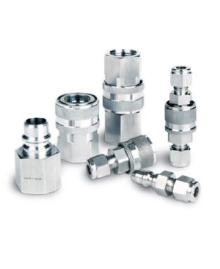
As mentioned above, connector type, shape, dimensions, and design complexity affect both connector pricing and purchasing decisions. Some of the most common and widely used instrumentation fittings include:
-
MALE ELBOW
-
BULKHEAD UNION
-
MALE CONNECTOR
-
FEMALE CONNECTOR
-
BULKHEAD FEMALE CONNECTOR
-
MALE RUN TEE
-
FEMALE BRANCH TEE
-
UNION TEE
-
FEMALE ELBOW
-
UNION ELBOW
-
REDUCING UNION
-
UNION
-
FEMALE ADAPTER
-
REDUCER
-
CROSS UNION
-
NUT
-
FRONT FERRULE
-
BACK FERRULE
-
CAP
-
PLUG
Connector Price
Each of these connectors has its own connection method and is designed and manufactured for specific applications and industries. For more information about their technical characteristics, refer to the relevant product catalogs and brochures.
When selecting tubing for operating temperatures above 100°F, use the applicable standard tables below.
As mentioned earlier, an instrumentation fitting used to connect tubing to a threaded pipe or component is commonly referred to as a connector. Connector purchasing, sales, and connector fitting prices depend on factors such as the material used in manufacturing, dimensions, and size. To obtain accurate pricing and choose the right connector for your application, consult specialists in the field.

ss-admin
On This Page
Need Help Choosing?
Our sales engineers can confirm the right valve for your line conditions.